300+
Account Holders
126
Counties Covered
6
Service Domains
24/7
Field Exercise
The Situation
The Training Aids, Devices, Simulators, and Simulations (TADSS) support services effort at Fort Hood operates as a core enabling function within the Army Training Support System (TSS), directly supporting installation-level readiness requirements defined under Army Regulation 350-52 and IMCOM Common Levels of Support (CLS) 905. The mission centers on sustaining a distributed, multi-user training ecosystem spanning active-duty units, reserve components, ROTC programs, and external institutional stakeholders.
The Training Support Center (TSC) serves as the central node for this ecosystem, where logistics, maintenance, fabrication, and technical support converge to deliver readiness outcomes. The absence of this capability would directly degrade training throughput, reduce equipment availability, and introduce operational risk across multiple echelons of force generation.
Our Approach
GTS delivers this requirement through six integrated capability areas operating under a unified program management structure. A contractor-developed Quality Control Plan (QCP) paired with Government surveillance via QASP creates a closed-loop performance system where internal validation precedes external evaluation.
Warehouse and Supply Chain Operations function as the central throughput mechanism, managing receipt, storage, issue, turn-in, and shipment of TADSS property. These operations integrate inventory systems, physical handling processes, and documentation requirements to maintain full lifecycle accountability of government property through platforms including GCSS-Army and TS-MATS.
Property Accountability and Inventory Management extends beyond storage to include full compliance with Army supply regulations (AR 710-2, AR 735-5), requiring continuous reconciliation between physical inventory and system records, sensitive item controls, and formal reporting for lost, damaged, or destroyed equipment.
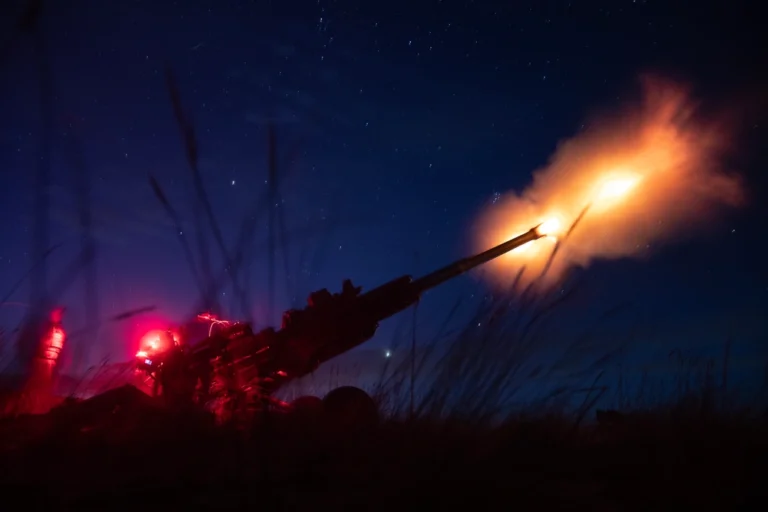
Technical Support and Field Services provide the direct operational interface with training units, including 24-hour field exercise support, equipment troubleshooting, system setup, and user guidance. This domain bridges warehouse operations with real-world training execution, ensuring that deployed equipment performs as required under field conditions.

Maintenance and Sustainment Operations include preventive and corrective maintenance at the operator and organizational level (-10/-20), ensuring all TADSS assets remain serviceable and available for issue. This includes diagnostics, repair, parts replacement, and coordination with higher-level maintenance when required.
Fabrication and Design Services introduce a production capability within the contract, enabling custom development of training aids, mockups, and simulation devices using multi-material fabrication techniques and engineering design processes. This capability enables rapid response to emergent or specialized training requirements that standard TADSS inventory cannot address.
All activities originate from a demand signal, typically a unit request or scheduled training requirement, which is logged, prioritized, and assigned to appropriate functional teams. Upon return from the field, assets undergo a controlled reintegration cycle: inspection, maintenance routing, inventory reconciliation, and readiness validation for subsequent issue. Maintenance operations are synchronized with this cycle, ensuring minimal downtime and consistent equipment availability.
The Results
Effective execution of this requirement produces measurable operational outcomes: sustained availability of training systems and devices across all supported units, reduced downtime through integrated maintenance and rapid repair cycles, continuous accountability of government property with audit-ready traceability, improved training readiness through reliable access to simulation and support systems, and standardized reporting enabling command-level visibility into resource utilization.
This engagement demonstrates GTS’s ability to integrate logistics, technical operations, engineering, and program management within a single delivery framework. The requirement for real-time inventory tracking, regulatory-compliant property accountability, and synchronized maintenance cycles reflects operational familiarity with Army supply chain systems and governance structures at scale. The combination of fabrication capabilities with field-level technical support reflects the ability to operate across sustainment and innovation domains simultaneously, with workforce requirements including certified Information Assurance personnel and ISO 9001-informed quality management practices.
GTS brings comparable workforce integration and multi-domain logistics expertise to its Enterprise Readiness Support operations at Anniston Army Depot, where depot-level sustainment and production support demand the same rigorous staffing controls and quality-validated delivery model. The operational integration demonstrated at Fort Hood also directly supports GTS’s administrative and technical support mission at the Naval Construction Training Center in Gulfport, where multi-site coordination and training system readiness drive similar workforce and program management requirements. The training system readiness and lifecycle support discipline central to TADSS also underlies the technical training management and program coordination GTS delivers for FEMA’s national hazard risk programs, where multi-stakeholder coordination and structured program delivery serve the same mission continuity objectives at a national scale.