$12M
Contract Value
165+
Workforce Categories
5
Capability Domains
3
Labor Categories
The Situation
Anniston Army Depot (ANAD) is a designated Organic Industrial Base (OIB) installation and one of the Army’s primary centers for heavy vehicle and ground equipment sustainment. As a core node within Army Materiel Command’s (AMC) production and repair enterprise, ANAD sustains readiness for combat and tactical vehicle fleets through depot-level maintenance, refurbishment, and overhaul operations at scale. Sustaining throughput at ANAD requires a continuously available, skilled workforce integrated across maintenance production, material coordination, and supply chain functions within a structured prime-subcontractor execution environment.
GTS was engaged as a subcontractor under Amentum to deliver labor, materials, and supervisory support enabling ANAD to maintain production continuity across its core sustainment missions. The requirement operates under a hybrid contract structure combining Time and Materials labor with cost-reimbursable travel, governed through formal order-based task authorization and a defined inspection and acceptance regime.
Our Approach
GTS structures its delivery around five integrated capability domains operating under unified program oversight. All task execution originates from formal order issuance by the prime contractor, flows through labor category-based workforce allocation, and concludes with inspection-validated acceptance. This governance model ensures that cost, schedule, and quality remain accountable at every stage of execution.
Workforce Execution forms the primary delivery mechanism, deploying Material Coordinators, Heavy Equipment Mechanics, and Automotive Painters across depot production lines. Staffing is structured by labor category to align workforce costs directly with work scope, supporting predictable labor-hour burn rates within funding CLINs.
Industrial Maintenance and Repair operations support heavy equipment sustainment at the depot level, encompassing preventive and corrective maintenance activities, diagnostics, and integration into ANAD’s refurbishment and overhaul production workflows. GTS mechanics operate within established depot processes, interfacing directly with prime contractor production schedules and quality control checkpoints.
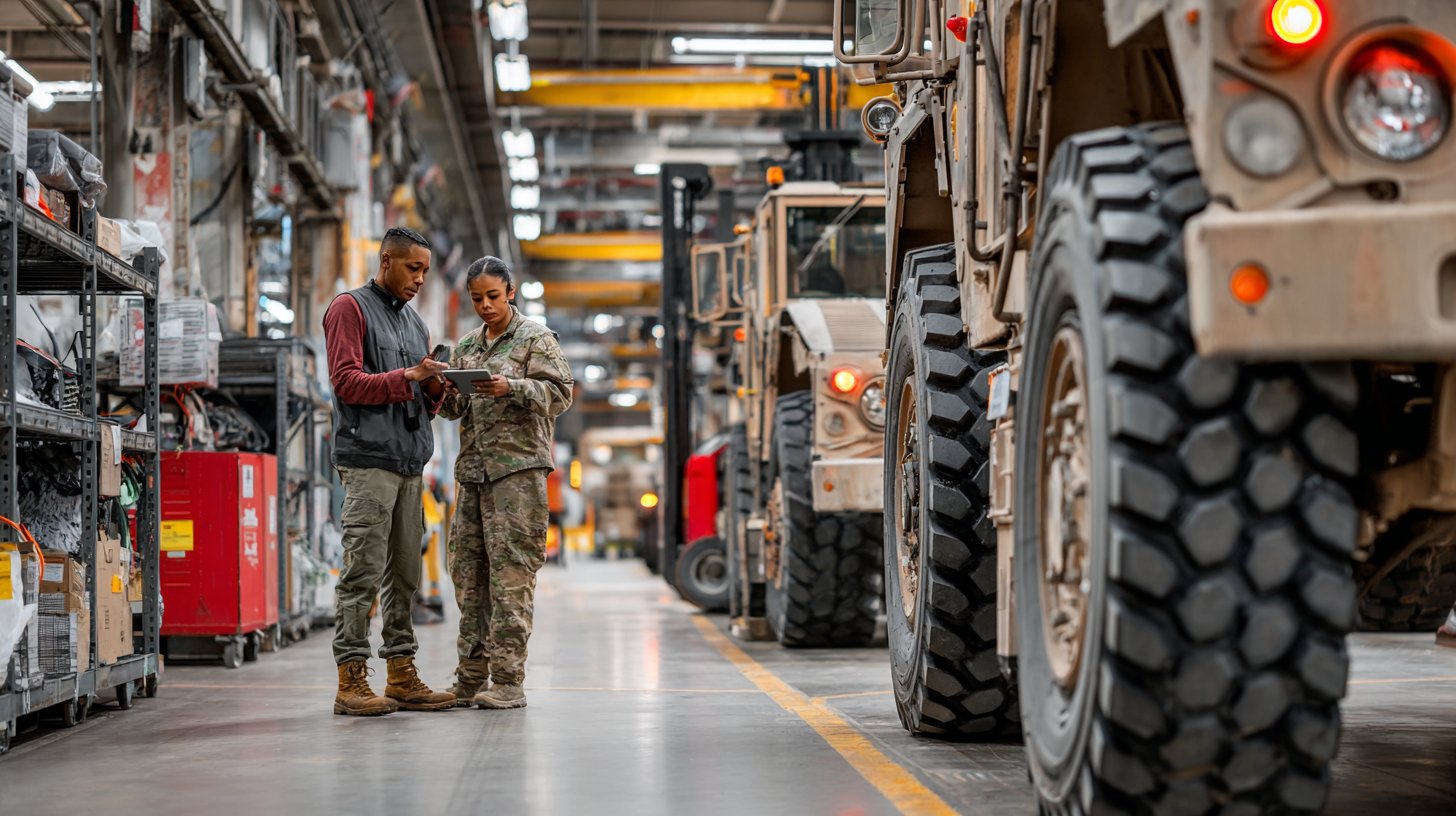
Materials and Production Support addresses the supply chain functions that underpin maintenance throughput. Material Coordinators manage staging, receipt, and movement of parts and assemblies within the depot supply chain, ensuring that maintenance production lines maintain continuous flow without material-driven stoppages.
Program and Subcontract Management governs task execution under the Amentum prime framework. GTS administers order receipt, workforce allocation, cost tracking, and performance reporting against subcontract requirements, maintaining compliance with federal contracting standards and prime contractor governance expectations.
Safety, Compliance, and EHS functions are embedded across all execution activities. Hazard assessments, safety controls, and regulatory compliance requirements are integrated into workforce planning and daily operations, with accountability for workforce safety maintained at the supervisory level throughout all production activities.
The Results
GTS sustains ANAD production throughput through continuous workforce availability across three labor categories, enabling the depot to maintain equipment readiness output against Army Materiel Command demand signals. Material coordination functions reduce supply chain-driven production interruptions, while inspection-validated maintenance execution supports quality acceptance requirements embedded in the subcontract governance structure.
This engagement demonstrates GTS’s capacity to deploy and manage large-scale skilled workforces within industrial depot environments operating under prime contractor authority. The requirement for order-based task execution, LCAT-structured cost modeling, and EHS program compliance within an OIB production setting reflects operational maturity across workforce management, industrial sustainment, and federal subcontract governance at a $12.07M execution scale.
The labor category-based workforce deployment model GTS applies at ANAD reflects the same staffing discipline that underpins GTS’s training equipment readiness work at Fort Hood under the TADSS contract, where multi-domain technical support and quality-controlled service delivery operate within comparable Army execution frameworks. GTS applies analogous subcontract governance and inspection-validated acceptance practices in its administrative and logistics support role at the Naval Construction Training Center in Gulfport, extending the same performance accountability standards across Navy training and depot sustainment environments. The program integration and performance management disciplines embedded in GTS’s depot support model also inform the agency-wide coordination GTS delivers for FEMA’s national hazard risk programs, where structured reporting, stakeholder engagement, and quality-controlled deliverables serve federal oversight requirements at scale.